
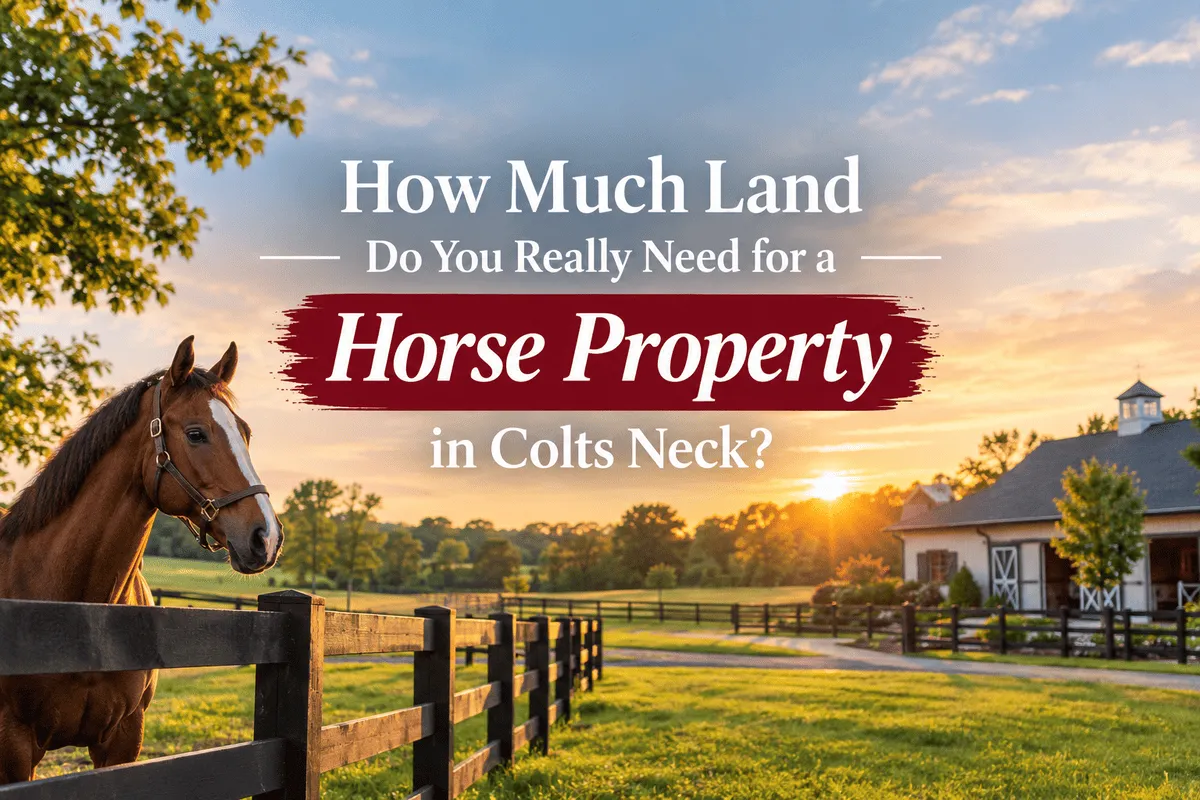
How Much Land Do You Really Need for a Horse Property in Colts Neck?
Buying a property for horses requires a different way of looking at land. The size of the house matters, but the usable acreage, layout, access, fencing, drainage, and space for horse-related facilities can be just as important.
Colts Neck is known for its rural residential estates, preserved farmland, open space, and equestrian farms, making the township a natural location to consider when searching for a property that can accommodate horses.
There is no single acreage number that works for every horse property. The right amount depends on the number of horses, how the land will be used, the property's physical characteristics, and applicable local requirements.
Start With How You Plan to Use the Land
The first step is deciding what the property needs to accomplish.
A horse property may need space for:
Pasture
Turnout areas
A barn
Riding or exercise areas
Fencing
Equipment storage
Parking and access
A smaller property may work differently from a larger estate. The important consideration is not simply the total number of acres but how much of that land can actually support the intended use.
Acreage Is Only Part of the Decision
Two properties with the same acreage can function very differently.
The shape of the parcel, terrain, drainage, wooded areas, existing structures, and access points can all affect how the land can be used.
For example, a property may have substantial acreage but less usable open space than expected. Another property may have a layout that makes fencing, turnout, or barn placement easier.
This is why buyers should evaluate the entire parcel rather than relying only on the acreage shown in a listing.
Think About the Horses First
The number of horses you plan to keep should influence the property search.
A buyer looking for space for one or two horses may have different needs from someone planning a larger equestrian setup. The intended use of the horses also matters.
Consider whether the property needs to accommodate:
Everyday turnout
Private riding
Training
Boarding
Storage
Additional animals
The more uses you expect from the property, the more carefully the land should be evaluated.
A Barn Can Change the Land Requirements
A barn takes more than the space occupied by the building itself.
Buyers should think about the area needed for access, deliveries, equipment, fencing, turnout, and safe movement around the structure.
Existing barns can also require careful inspection. Their age, condition, layout, utilities, and suitability for the buyer's intended use should be reviewed before making assumptions about their value to the property.
A property without a barn may still work for a buyer, but the feasibility of adding one should be investigated before purchase.
Fencing and Turnout Need Real Planning
Fencing is an important part of a horse property's layout.
The location of fences can affect how much land is available for turnout and how easily the property can be maintained. Gates also need to work with driveways, barns, pastures, and equipment access.
A buyer should look at the entire property and determine whether the existing fencing works for the intended use or whether changes may be necessary.
Don't Overlook Access
Horse properties need practical access.
Think about how trailers, feed deliveries, farm equipment, service vehicles, and everyday vehicles will enter and move around the property.
A beautiful rural parcel may not be the right choice if its access does not work for the buyer's intended use.
This is also an area where professional advice can be important before purchasing land.
Colts Neck Has a Strong Equestrian Connection
The equestrian character of Colts Neck is part of the community's broader rural identity. Monmouth County records also document the area's agricultural and preserved-land history, including preserved farmland in Colts Neck.
Dorbrook Recreation Area is another local example of the community's connection to its open-space and agricultural history. The county describes the area as having originated from Dorbrook Farm, with the land having been farmed for generations.
For a buyer looking for a horse property, these local characteristics provide useful context when evaluating the type of setting they want.
Compare the Property With Nearby Areas
A horse-property search does not always need to stop at Colts Neck.
Middletown is another part of the service area where buyers may consider different property settings. The surrounding Monmouth County communities can offer different combinations of land, homes, access, and property characteristics.
For buyers coming from Hoboken, Jersey City, or Bayonne, the move to a property with horses may also represent a major change in how much land and privacy they need.
Weehawken can be part of a buyer's existing connection to the area, while a search farther into Monmouth County may provide a different type of property.
The right choice depends on how the land will actually be used.
Check Restrictions Before Counting on the Land
A parcel's acreage does not automatically mean every part of it can be used for every purpose.
Before purchasing a horse property, buyers should investigate applicable zoning, land-use restrictions, easements, environmental considerations, and requirements for structures or other improvements.
Questions about zoning and construction should be confirmed with the appropriate local authorities and qualified professionals.
This step is especially important when a buyer expects to add a barn, riding area, fencing, or other improvements after purchasing the property.
Look Beyond the Current Horse Setup
A horse property should also work for future needs.
A buyer may eventually want more storage, different fencing, another structure, additional turnout space, or changes to the home's outdoor areas.
Thinking about these possibilities before purchasing can help avoid choosing a property that works today but becomes difficult to use later.
The goal is to find land that fits the intended lifestyle without assuming that every part of the property can be changed.
How a Realtor Can Help With the Search
A Realtor can help buyers identify properties that fit their basic location and land requirements and compare options across the area.
Tarek Hassieb works with buyers across Colts Neck, Middletown, Monmouth County, Hoboken, Jersey City, Bayonne, Weehawken, Hudson county and surrounding areas.
For a horse-property search, a Realtor can help with the real estate side of the process, while zoning officials, inspectors, land professionals, veterinarians, contractors, and other specialists can address questions that require their specific expertise.
So, How Much Land Is Enough?
There is no universal acreage number for a horse property.
The better question is whether the available land can support the buyer's intended use, number of horses, facilities, access, fencing, and future plans.
In Colts Neck, buyers have the opportunity to consider properties within a community that has a documented rural and equestrian character.
A careful evaluation of usable land, property restrictions, existing improvements, and future possibilities can help buyers make a more informed decision.
FAQs
Is Colts Neck suitable for horse properties?
Colts Neck has a rural character and a documented connection to equestrian farms and preserved farmland.
How many acres do I need for horses?
There is no single acreage requirement that fits every situation. The number of horses and intended property use both matter.
Is usable land more important than total acreage?
Yes. Terrain, structures, wooded areas, drainage, access, and the shape of the parcel can affect how much land can actually be used.
Should I check zoning before buying a horse property?
Yes. Confirm applicable zoning and land-use requirements before assuming that horses, barns, fencing, or other improvements are permitted.
Can a Realtor help me find a horse property?
Yes. A local Realtor can help identify and compare properties based on location, acreage, existing features, and the buyer's requirements.